
This page is archived. Information on this page contains outdated information from the last update in November 2024. The content below provides historical background information and a general span of the Jordan Lake Water Supply Program facilities. An updated virtual public meeting webpage will be made available late fall 2026. Visit jordanlakewatersupply.com for the most current information regarding the Jordan Lake Program facilities.
Key updates include, but are not limited to, the locations of the proposed Water Treatment Plant and Raw Water Pump Station. The Water Treatment Plant, which will now be managed by the City of Durham, is planned to be located adjacent to the South Durham Water Reclamation Facility at 6903 Farrington Road. The property fronting Seaforth Road and N Pea Ridge Road will continue to be part of the program as the site for the Raw Water Pump Station, which will still be managed by the Western Intake Partnership.
September 2024 Jordan Lake Water Supply Project Public Meeting
From January 2023 to September 2024, the Western Intake Partnership hosted four public meetings on the Jordan Lake Water Supply Project, providing updates and gathering input to enhance the project approach and design. This virtual version retains information from the September 2024 in person open house event in Pittsboro and reflects the same materials provided for those unable to attend.
Leave your feedback any time using the comment form.
Project Overview
The purpose of the Jordan Lake Water Supply Project is to achieve the following objectives:
- Access water from Jordan Lake which was allocated to the WIP Partners for water supply by the State of North Carolina.
- Meet the projected water demand in the WIP Partners’ service areas by increasing raw water supply and treatment capacity.
- Improve regional water supply reliability and resiliency by increasing the capacity to withdraw state-allocated water supply from a new raw water intake structure on the west side of Jordan Lake.
- Provide high quality drinking water that meets the requirements of the Safe Drinking Water Act and the North Carolina Drinking Water Act with a state-of-the art water treatment facility that is designed to treat for contaminants of emerging concern including 1,4-dioxane and per- and polyfluoroalkyl substances (PFAS).
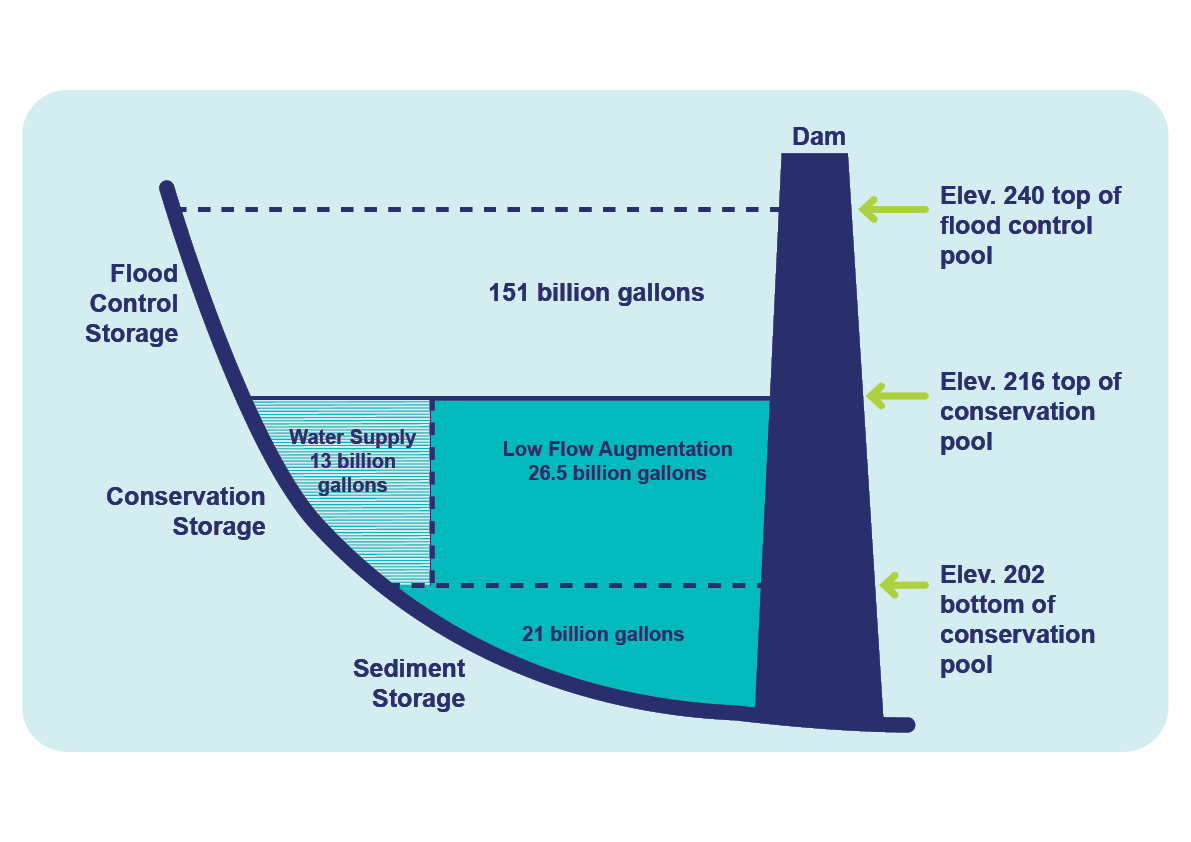
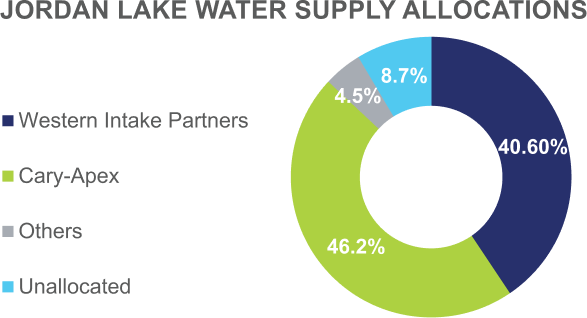
Water Supply is one of the purposes of Jordan Lake, along with flood control, recreation, water quality and fish/wildlife conservation. Allocations for water utilities' water supplies are drawn from the Water Supply Pool shown in the diagram below. The state estimates 13 billion gallon water supply storage volume has a sustainable yield of about 100 million gallons per day.
North Carolina Water Resources Division (NCDWR), 2017. Round 4: Jordan Lake Water Supply Allocation Recommendations. Prepared by NCDWR for the North Carolina Environmental Management Commission. DWR: Local Water Supply Planning (ncwater.org)
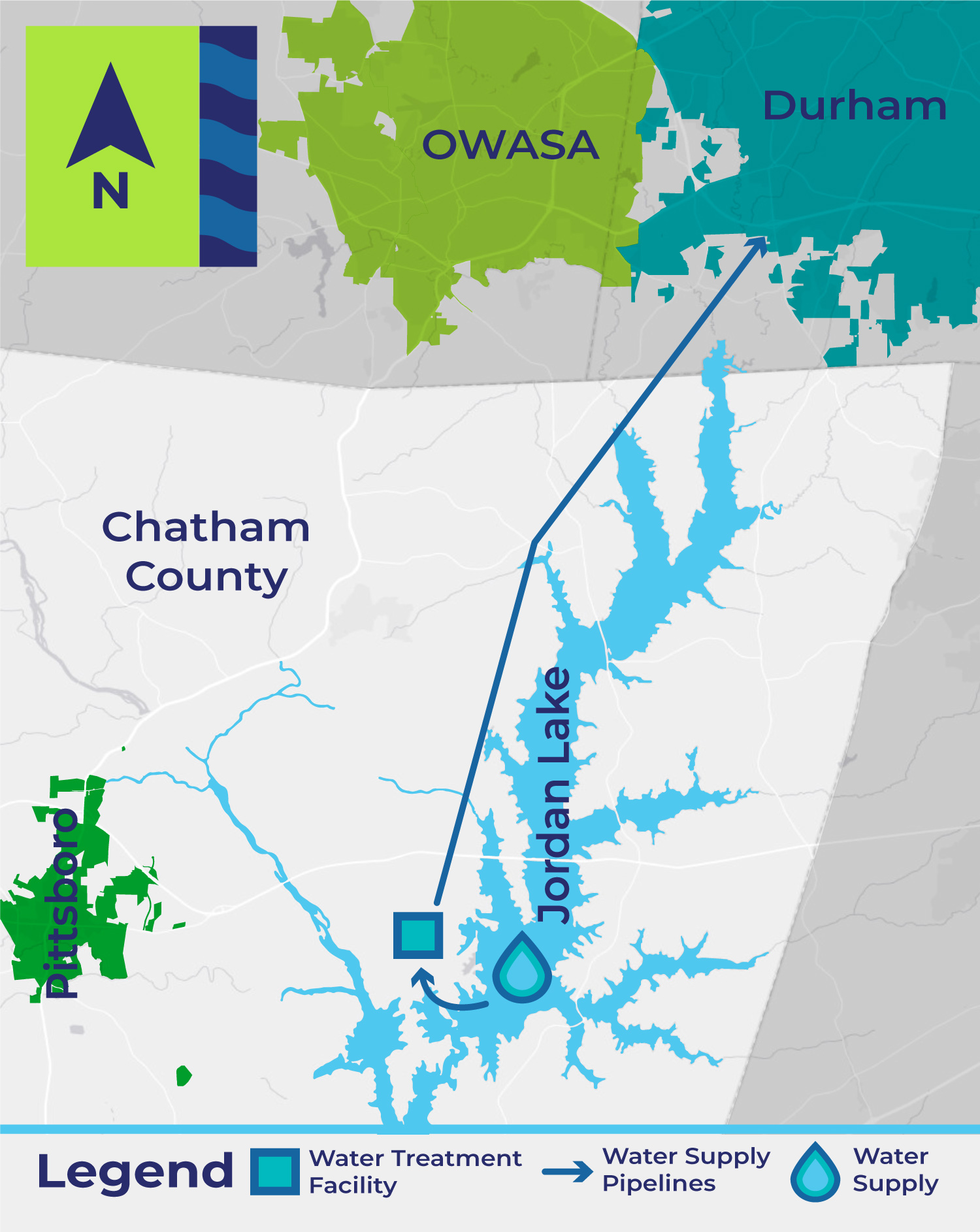
The Jordan Lake Water Supply Project can be thought of in two distinct parts – (1) the facilities required to withdraw water from Jordan Lake and deliver it to the regional water treatment facility, where the water will be treated to become high-quality drinking water, and (2) the transmission infrastructure carrying the treated drinking water from the water treatment facility to the Partners’ distribution systems. Both parts of the Jordan Lake Water Supply Project will be described further on the following pages.
Water Intake and Treatment Facility
A new raw water intake and pump station on the west side of Jordan Lake, a regional water treatment plant on property currently owned by one of our member utilities, and a water supply pipeline connecting them.
Drinking Water Supply Pipelines
Regional water supply pipelines to deliver treated water to our communities.
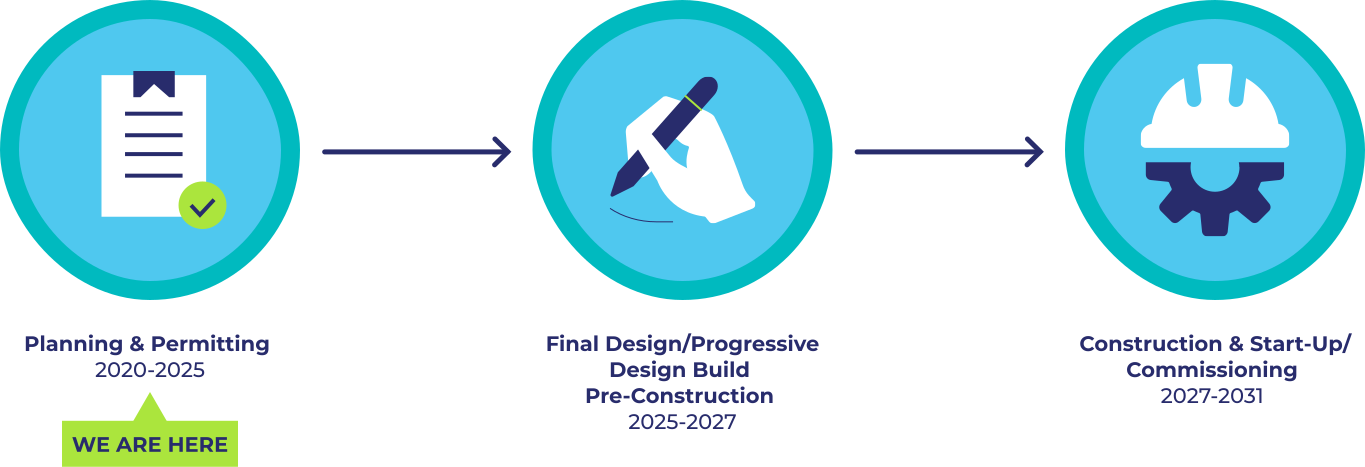
The project is planned to proceed in three phases, with the goal of operational facilities by 2031:
Water Supply and Treatment
The Jordan Lake Water Supply and Water Treatment Facilities incorporates 3 elements:
A new raw water intake on the west side of Jordan Lake.

A water supply pipeline and pump station to transport water from intake to treatment facility.
A regional water treatment plant.
Intake
- Tower-style intake structure constructed in Jordan Lake north of Vista Point recreation area, in deepest part of the lake
- Initial capacity ~24 MGD. Designed to install additional screens in the future, as capacity needs increase
- Focused on resiliency – Intake able to withdraw water from any of 3 elevations
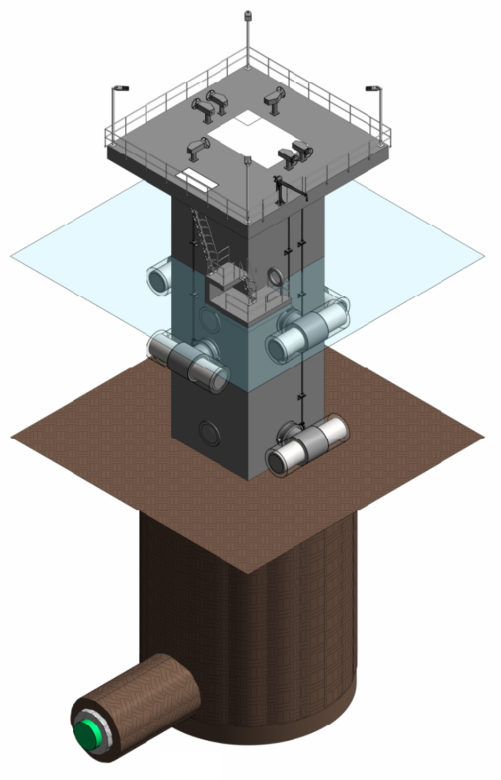
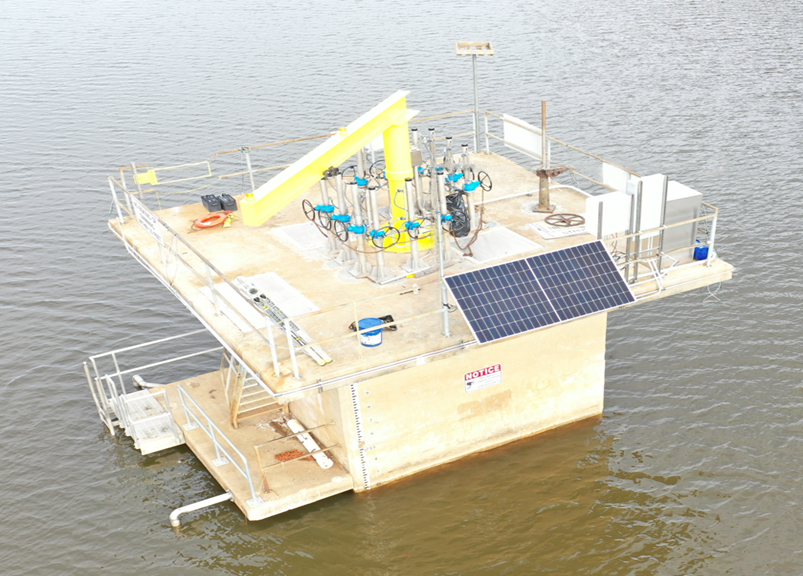
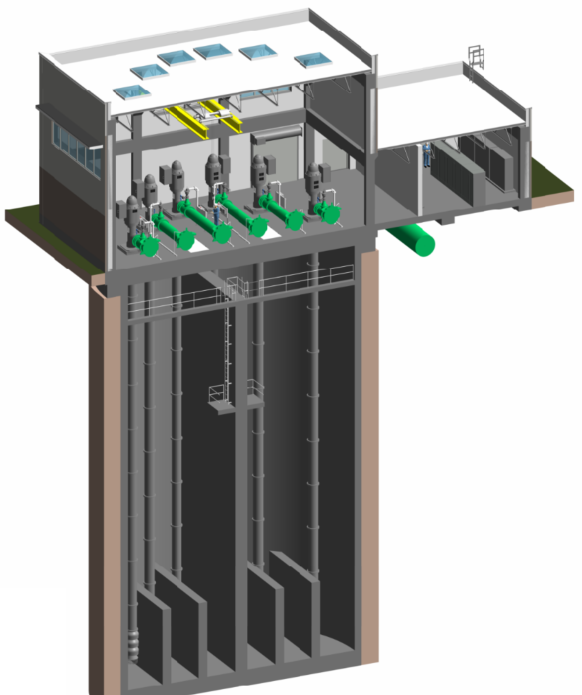
Intake Tunnel & Raw Water Pump Station
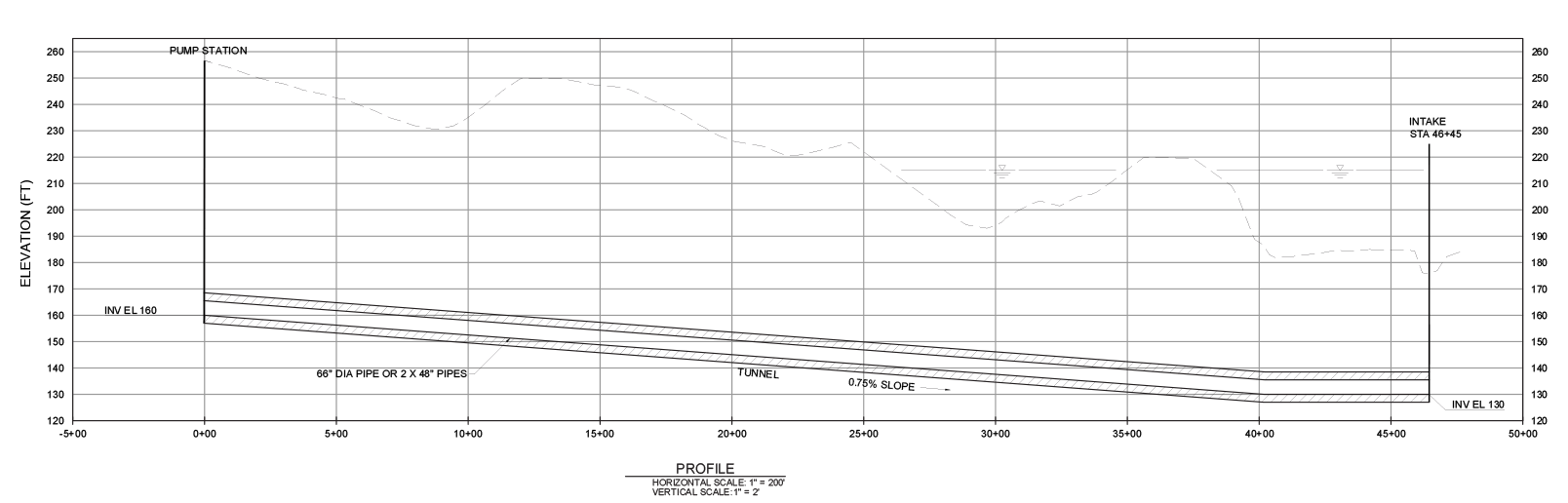
- Approximately 0.9-mile tunnel bored under Jordan Lake by a tunnel boring machine (TBM), with 66-in water supply pipeline between lake intake and treatment facility intake pump station sized for long-term future water demand
- Raw Water Pump Station at the southeast corner of the water treatment facility, sized for initial needs with ability to replace pumps to increase capacity in the future.
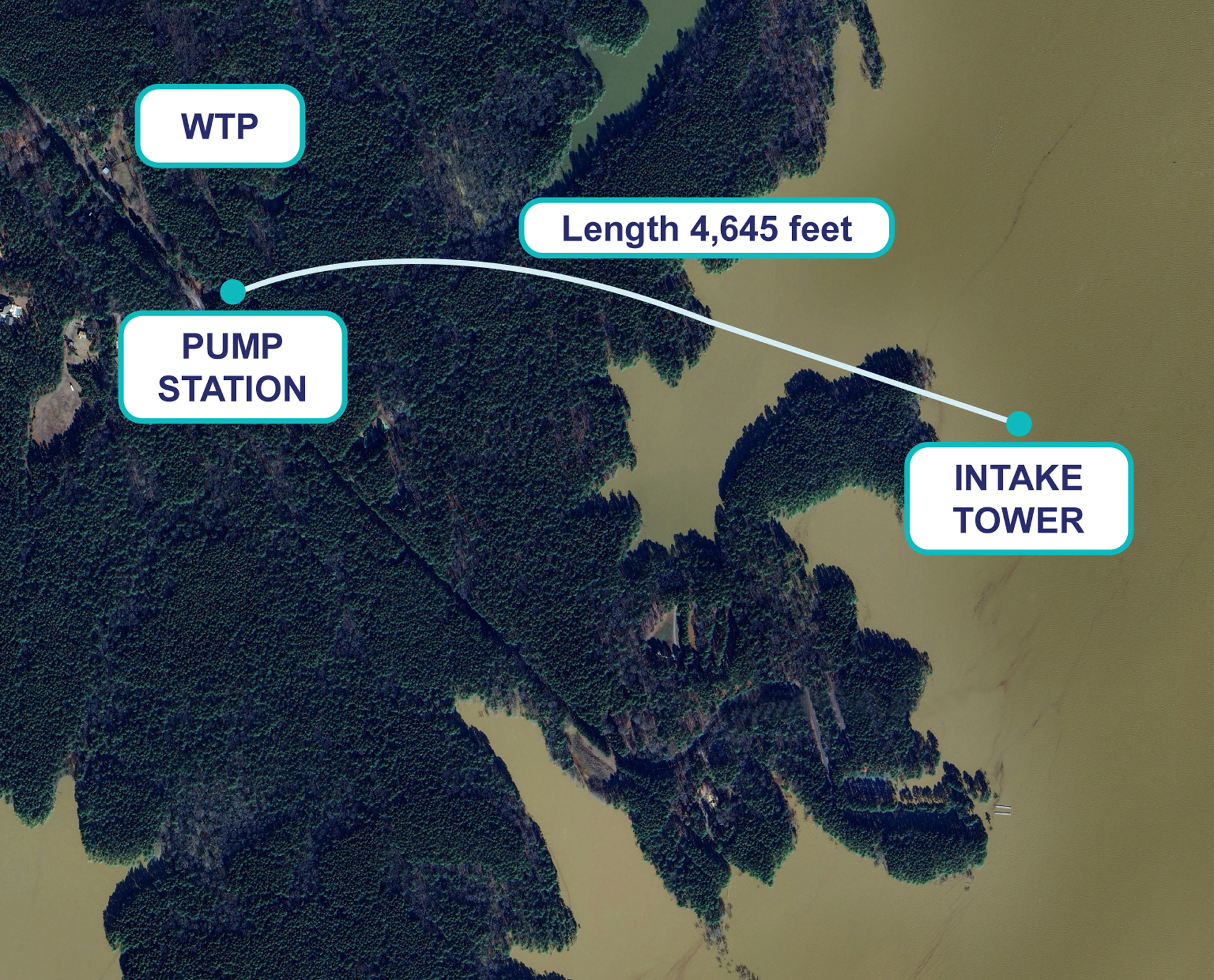
Intake To Pump Station Tunnel’s Vertical Alignment
Treatment Facility
State-of-the-Art Facilities
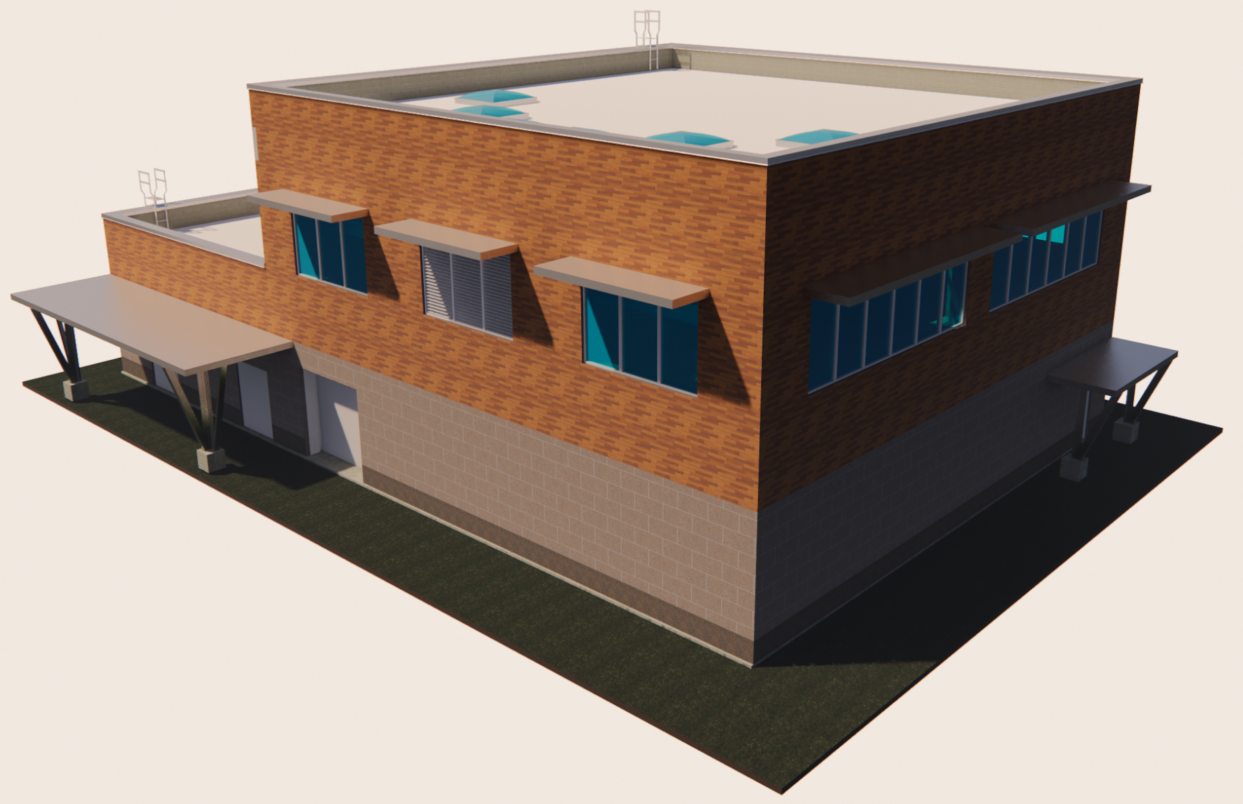
The proposed state-of-the-art Water Treatment Facility project would include structures for the treatment process (intake station, pump station, pipeline and treatment plant), as well as:
- Administration Building
- Maintenance Building
- Electrical building and generators for backup power
- Storage tanks
- Lighting, parking, and fencing
Additional views of the Treatment facility can be seen on the following page.
Vegetation Buffer Plans
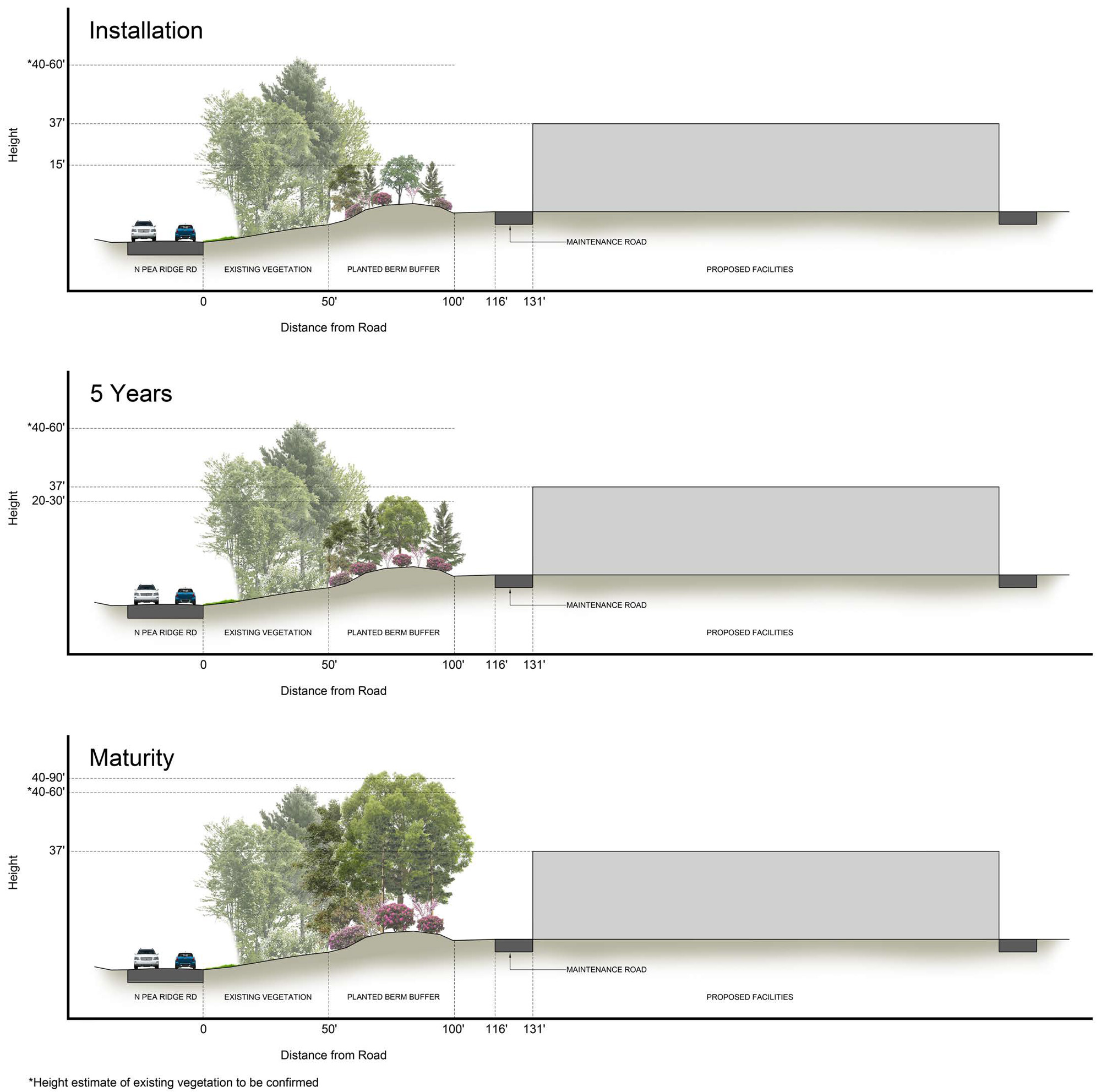
The Facility design will seek to minimize impacts on neighbors and the state park with vegetated buffers. Below, you can see how these buffers along North Pea Ridge Road would grow over time.
A Look into WIP’s Future Treatment Facilities
The following maps represent:
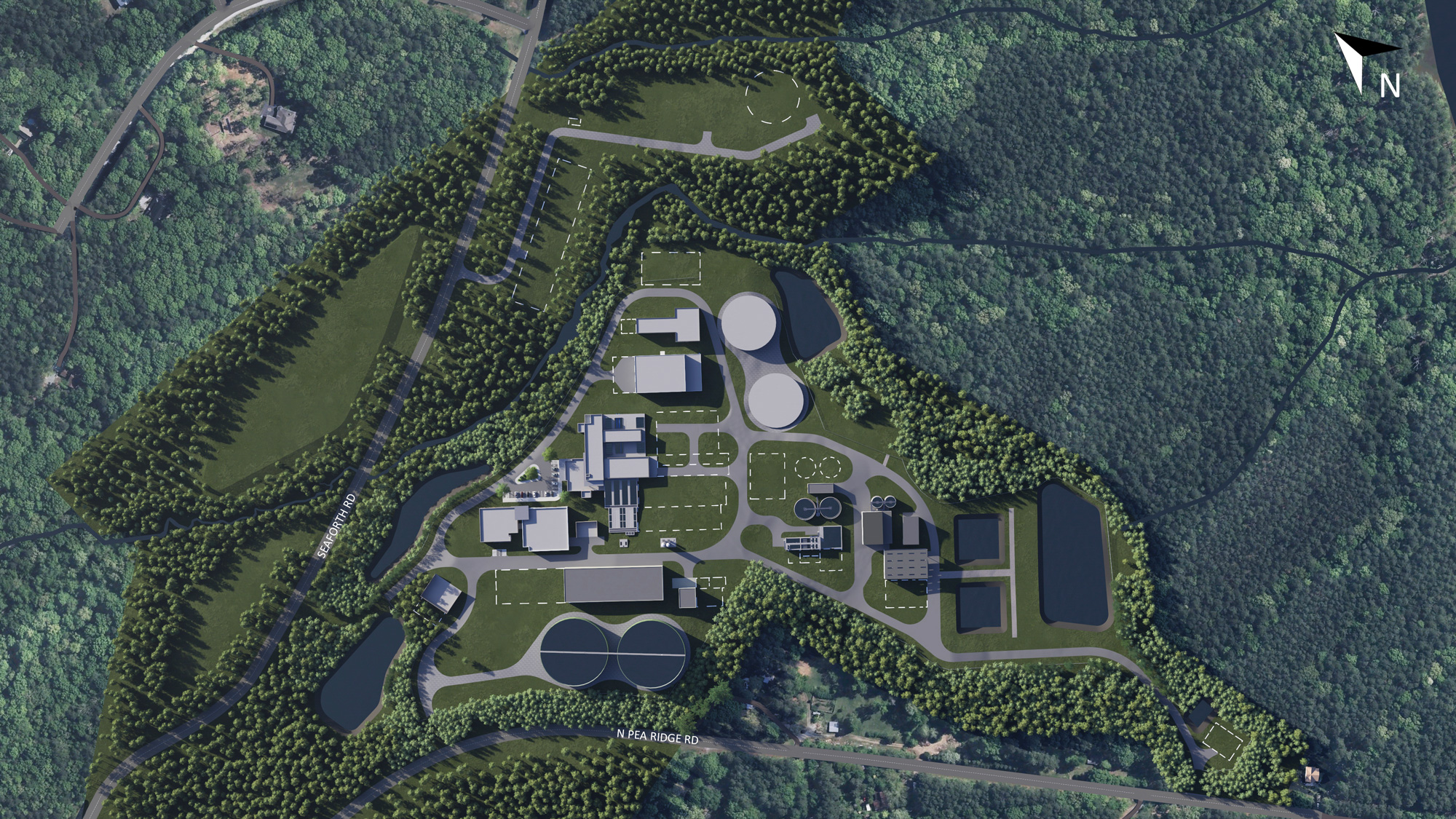
- a preliminary rendering of the future water supply facilities with natural vegetation buffers surrounding the property and outlines for future buildout,
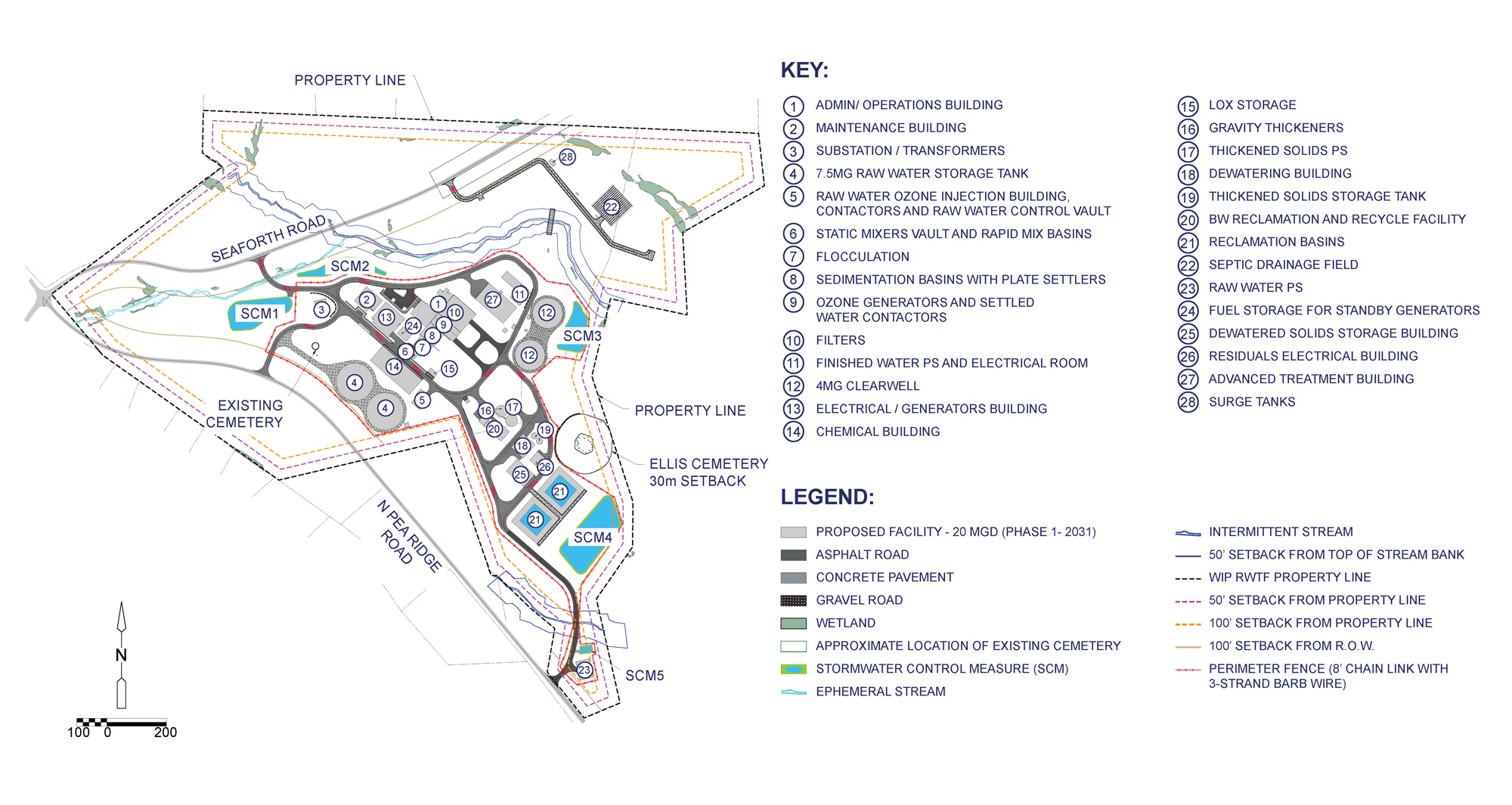
- a preliminary site plan for the initial facilities to be constructed (estimated in operation by 2031) with labels describing each facility element, and
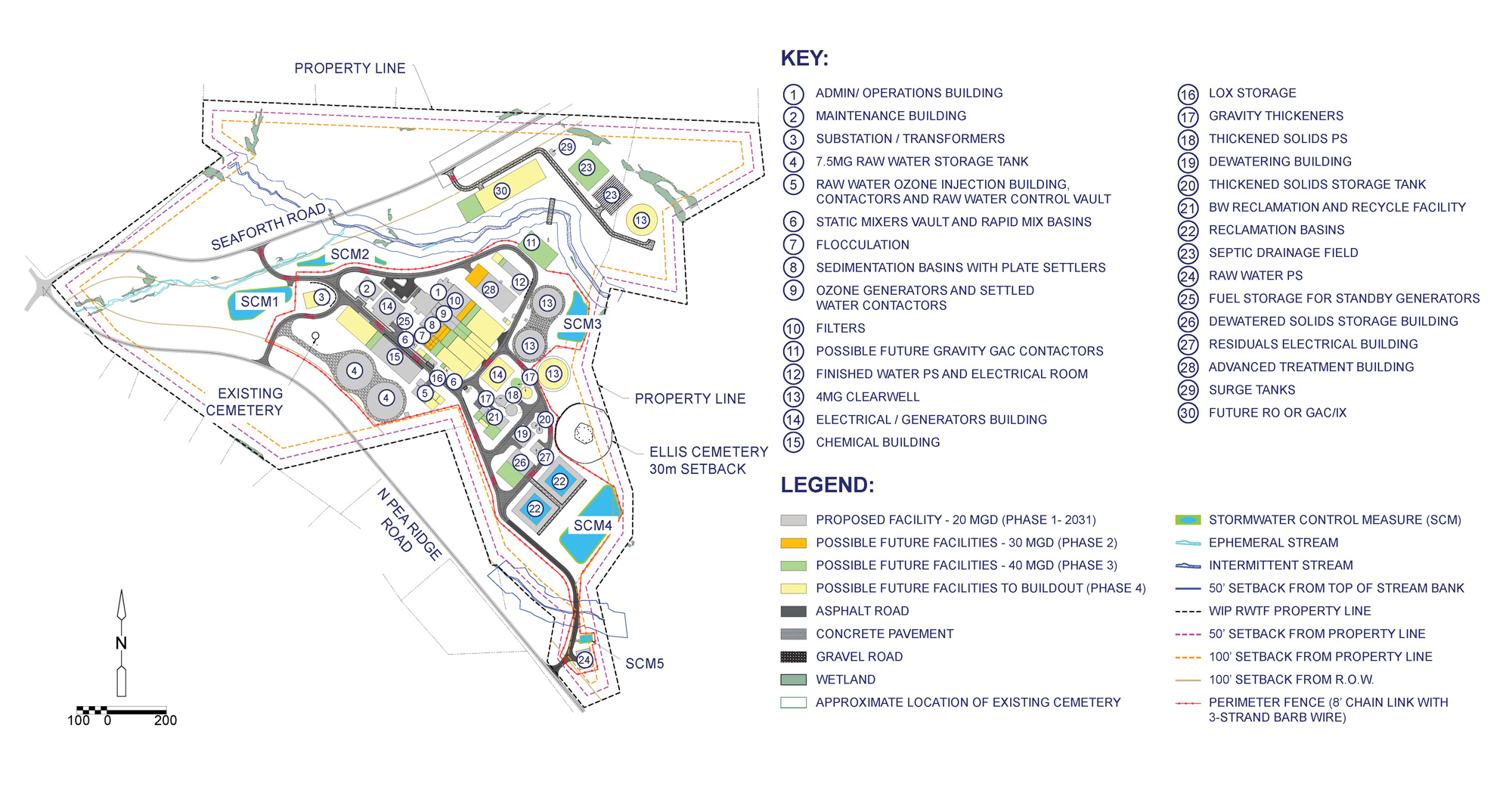
- a preliminary site plan of the long-term facility build-out plan, with labels describing each facility element
Preliminary Site Rendering
Preliminary Site Plan – Initial Treatment Facility
Long-term Preliminary Site Plan (Future 50+ years)
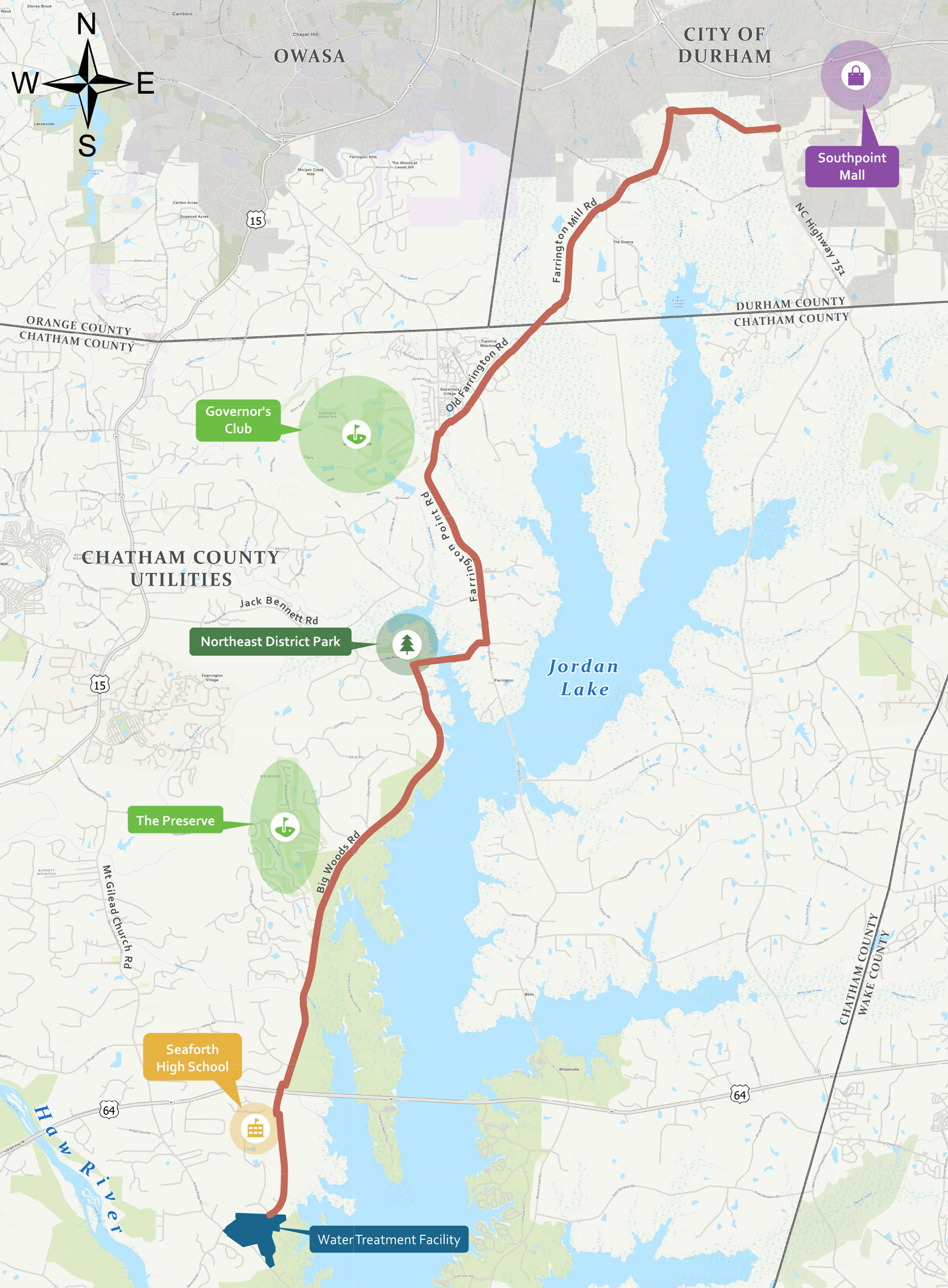
Preliminary Transmission Pipeline Route
During the Project’s preliminary phase, the Partners’ consultants have evaluated many route alternatives from the Water Treatment Facility through eastern Chatham County to connect to the City of Durham water distribution system. The result of these evaluations is a 16-mile pipeline, primarily along existing roadways. Care will be taken along the Transmission Pipeline route to minimize impacts to wetlands and streams, and the project is expected to qualify for a Nationwide Permit; at two locations along the route, tunneling is planned to minimize impacts.
On the next page, you are invited to use the look-up tool to see preliminary placement of the pipe at each address along the Transmission Pipeline route, and limits of disturbance during construction.
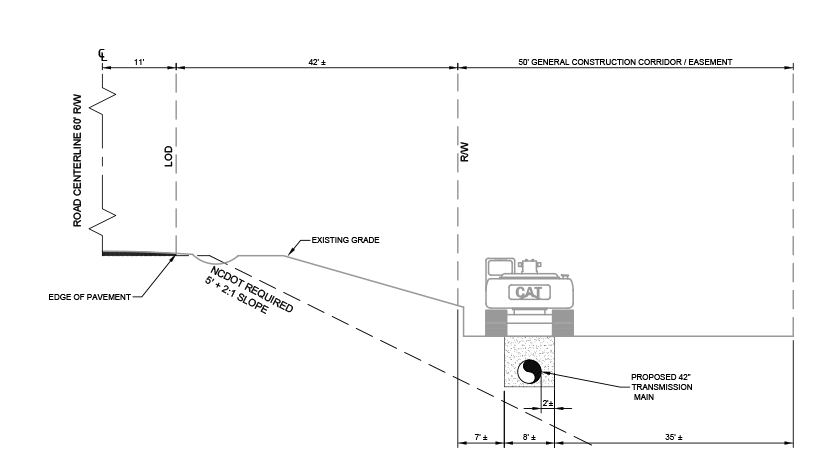
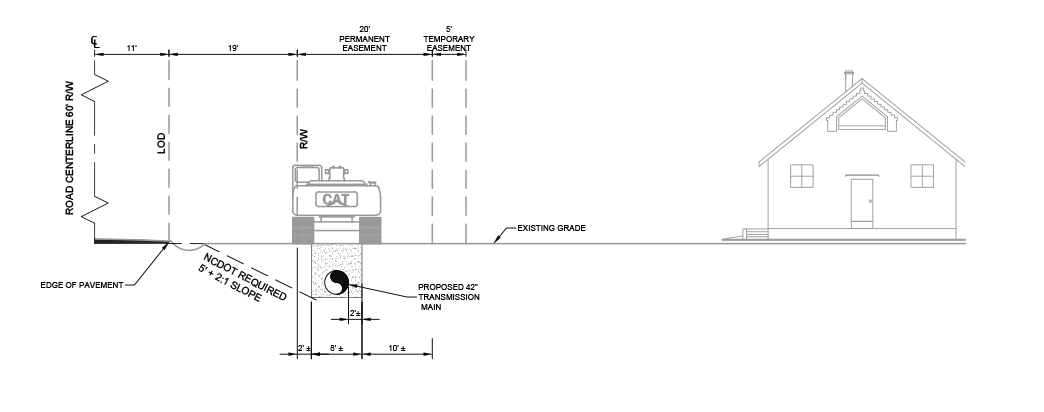
Constructing the Transmission Pipeline
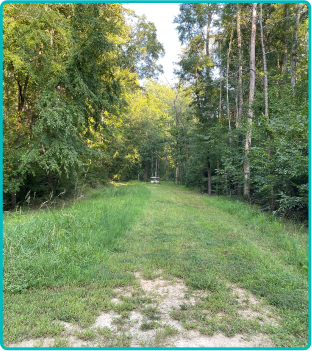
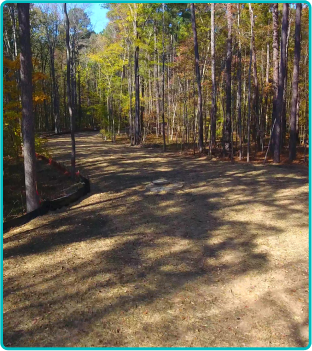
Construction will be in cleared corridors or adjacent to the right of way.
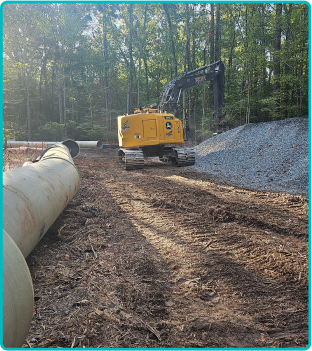
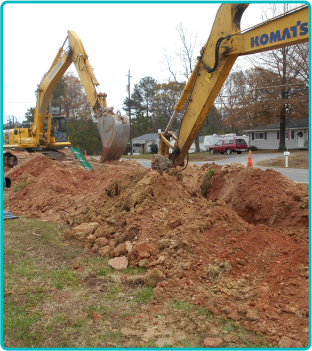
Restoration and temporary driveway repair will occur following pipe installation.
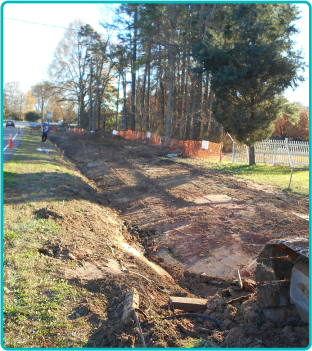
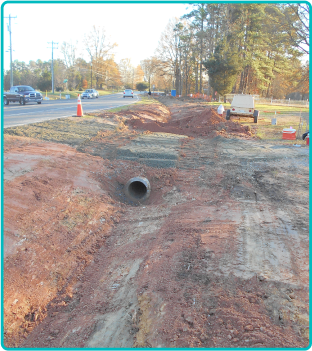
After construction, the corridor is stabilized, grass is allowed to grow and permanent driveway repair will occur.
Protecting Our Environment
Consistent with its values, the Western Intake Partnership seeks to achieve responsible, balanced development of its water supply by first avoiding and then minimizing adverse impacts to natural and human resources.
We achieve this through...
Careful
Siting
Mitigating
Offsets
Alternatives
Analysis
Innovative
Design
Public
Engagement
Coordination with Federal and State Agencies
Our Approach
The overarching approach to addressing environmental resource concerns is to:
Identify resources with the potential for impact,
Avoid disturbance of resources wherever feasible,
Minimize disturbance when resource impacts cannot be avoided, and
Mitigate Mitigate for unavoidable impacts.
- Identify
- Avoid
- Minimize
- Mitigate
Between January 2022 and July 2024, the WIP has collected and analyzed information on a broad array of environmental resources. Results were compiled into a draft environmental assessment that has been submitted to the U.S. Army Corps of Engineers for its review in support of approvals needed from the agency.
The 21 resource types considered in the assessment were placed in four categories:

Physical
- Climate
- Geology
- Air Quality
- Floodplains
- Water Quality
- Groundwater
- Wetlands & Surface Waters

Biological
- Vegetation
- Fisheries
- Wildlife
- Protected Species

Cultural
- Historic and Archaeological

Socioeconomics and Other
- Socioeconomics
- Environmental Justice
- Land Use
- Water Supply
- Traffic
- Noise
- Hazardous Materials
- Recreation
- Public Safety
The environmental assessment was prepared to satisfy requirements of the National Environmental Policy Act (NEPA). Additional resource evaluation may be needed as part of federal, state, and local permitting requirements during the coming months.
Key Environmental Findings
Key findings from the environmental assessment include:

No potential Environmental Justice concerns have been identified
- WIP will continue to gather community information and communicate with the public on its plans
The JLWSP will satisfy important public supply water needs through 2070 and beyond

Recreational uses at Vista Point Recreation Access Area to be suspended during part of the JLWSP construction period
- WIP is working with NC Parks to offset the temporary closing of this recreational area

Placement of intake tower in Jordan Lake could pose potential safety concerns for boaters
- WIP is working with NC Wildlife Resource Commission to mitigate their concerns

Little or no significant impact for most environmental and cultural resources
- No impacts to historic or archaeological features, with concurrence from the NC State Historic Preservation Office
- Most disturbances to wetlands, streams and surface waters will be temporary, and permanent impacts will be restricted to small areas
- No significant impacts to fish and aquatic wildlife
- No significant impacts to air quality, climate, floodplains, groundwater, wildlife, land use, traffic, hazardous materials

Unavoidable loss of trees at the Treatment Facility site and along the transmission pipeline route to Durham
- Treatment Facility will have permanent, undisturbed vegetated buffer around the site, as defined in rezoning conditions
- Pipeline corridor managed to non-native vegetation; vegetation will be allowed to regrow in the corridor
Environmental Permits and Approvals
The WIP Jordan Lake Water Supply Project is already communicating frequently with Federal, state and local agencies, and will apply for the appropriate environmental permits and regulatory approvals. The Partners are planning for a sustainable, environmentally-sensitive project, and are committed to complying with applicable regulations and the conditions of the project permits. Below are some of the permits and regulations applicable to the Project.
U.S. Army Corps of Engineers/Federal Agencies
- Submitted two separate non-recreational outgrant requests for permission to construct the intake and transmission pipelines on federal property
- Clean Water Act Section 404 Authorization - “dredge and fill” permit for minor activities in streams or wetlands
- Each Corps approval must comply with the National Environmental Policy Act (NEPA) - Environmental Assessment prepared for the project
- Compliance with Endangered Species Act
- Compliance with National Historic Preservation Act
State of North Carolina
- NC Division of Water Resources (DWR)
- Water Quality Certification
- Jordan Lake Water Supply Riparian Buffer
- NC Department of Energy, Minerals, and Land Resources (DEMLR)
- Erosion and Sediment Control Permit
- National Pollutant Discharge Elimination System (NPDES) Construction General Permit for stormwater
- NPDES Individual Permit for water treatment facility
Chatham and Durham Counties
- Re-zoning of Water Treatment Facility site completed March 2024
- Compliance with Land Development, Watershed Protection, and other applicable ordinances
Public Input on Environmental Issues
Previous comments submitted to federal, state, and local agencies on the permit applications are under review. Other opportunities to engage with the project will be posted on the WIP website. Thank you for your input!
How to Stay Up-to-Date and Contact Us
How to Submit a Comment

Submit a comment using the online comment form.

Mail a letter to 555 Fayetteville Street, Ste 900, Raleigh, NC 27601.
Comments will be accepted through the project design phase. As the project progresses, additional public meeting opportunities will be available.
Scan to Visit the project website
You can sign up to join our stakeholder email list on the project website: